
Author Spotlight
Yann Martel’s Favourite Genre-Bending Books
Plus, a thought-provoking conversation with the Canadian author.

“I’m reading them right now to my 10-year-old son, Jasper. Riordan sets the world of the Greek gods in contemporary America—the Underworld is just below L.A.—with a cast of characters including satyrs and half-godly children. Percy Jackson is the son of Poseidon. The books are hugely entertaining, and you learn about Greek mythology at the same time.”
Boxed Set
$60.95

“Gilgamesh, in two versions, a translation by Stephen Mitchell and then a riff by the Canadian poet Derrek Hines, to be read in that order. Gilgamesh is an ancient Mesopotamian epic, as old a story as we’ve got, yet the King of Uruk’s struggles with his mortality feels timeless. Mitchell’s translation is sparkling, and then Hines gives it a nice modern buff.”
Paperback
$27.00

“Madeline Miller’s Song of Achilles, an affecting story of the tragic love of Achilles and Patroclus, set off a whole sub-genre of modern feminist retellings of Ancient Greek stories, preceded by Pat Barker and her bold Women of Troy trilogy, showing just how adaptably chameleon-like the foundational stories of Western civilization are.”
Paperback
$21.99
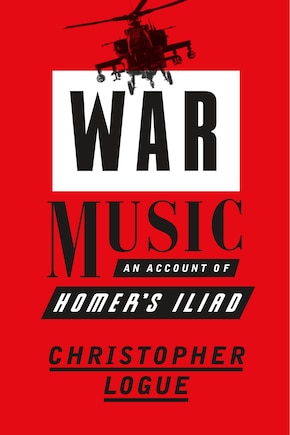
“Christopher Logue’s War Music, a modernist improvisation on The Iliad, to, going back, lest he be momentarily forgotten, James Joyce’s Ulysses.”
Paperback
$29.00
What book feels like home to you?
“None that I’ve ever read. The books that I’ve liked have always taken me far away from home. Dante’s Divine Comedy, for example. Or Mishima’s The Sailor Who Fell from Grace with the Sea. Or Knut Hamsun’s Hunger. Or Willa Cather’s Death Comes for the Archbishop. Among many. These books changed me because they were so alien.”
Which living author do you most admire?
“J. M. Coetzee, because I don’t know how he does it. He has no obvious stylistic flourish, no repeated theme, no immediate emotional palpability. He’s understated, yet so powerful.”
What’s your most unusual writing habit?
“I often start my writing day by playing a game of computer chess or working on a Sudoku. This isn’t me wasting my time or procrastinating. It’s rather that the nature of a game becomes a writing aid.... Once I’ve settled into the game for some minutes, I then switch my focus to my work on the page. Otherwise, when I need a creative charge, I’ll play my air guitar to loud music. I can’t believe that’s unusual. I imagine writers through the ages have done the same thing.”
What’s the first thing you do after finishing a draft?
“Start over. The word 'draft' feels a little quaint to me. I see in my mind a typewriter-produced sheaf of papers, hundreds of loose-leaf pages with any errors blotted out with XXX. Writing on a computer as I do, there is no such output, neither in practice nor even in theory. Every day when I start writing I go back twice: first, to the last several pages I’ve written, going over them to see if I want to bring any changes, and then, second, to any part of the book that for some reason is sticking in my mind.... In this process, then, there are no drafts so much as micro-drafts that endlessly overlap. “
Describe your writing process in one word?
“Painterly (as in the words are applied one dab at a time, slowly, over time).”
Where do you most like to write?
“In my studio, alone, to quiet music, on my treadmill desk, walking slowly, writing slowly. On the outside, totally boring; on the inside, totally thrilling. A writer’s studio just doesn’t have the excitement of, say, a painter’s studio. Google Francis Bacon’s studio, to take just one example. That mad, colourful mess, the creativity exteriorized, made exoskeleton—you just don’t get that with a writer, or no writer that I know. At most, you get messy bookshelves. But the inside of the writer’s head? That’s something else. What a joy to chase down words, align them and connect them like wires, and then feel the shock as they work their magic.”
If you could swap places with another author, who would that be?
“That’s an intriguing question. One of the Gospel writers, perhaps Matthew. None of them met Jesus, so that’s not the point. It’s more to feel the headiness of the inspiration, to be writing a biographical story about a son of God, nothing less. Or The Prophet Muhammad. I mean, to have the Archangel Gabriel whispering in your ear, that’s one impressive muse. Otherwise, I suppose writers whose writing I’ve admired. Hemingway, for example. I wouldn’t want to swap places with him in Idaho, when he picked up his rifle in his final moments. But earlier, when he was crafting those sentences that so radically transformed written English, that mesmerizing cadence, so secular yet so exalted. Or Tolstoy, to see how a genius thinks. Or Virginia Woolf—how did she write The Waves, what was she thinking? Or how about Agatha Christie?! There’s a good one, a writer whose ambition perfectly matched her output. How did she craft those superlatively clever (and well-written and funny) murder mysteries?”
Which book is your most treasured possession?
“One that I’ve lost. It was an edition of Les Fables de La Fontaine, in French, which happens to be my mother tongue, the language I spoke with my parents. It was a tiny book, about four inches by three, a hardcover. As a child, I read the book several times. His fables are short, clear, dazzling. They marked me. When my father died and I had to move my mother, too affected by Alzheimer’s to live on her own, to a care home, I had to empty their apartment of their thousands of books. I cared for none of them as objects, because while my parents were big readers, they were not bibliophiles. None of their books had any outstanding commercial value; they were all regular hardcovers and paperbacks. So I remember finding Celine’s Voyage au Bout de la Nuit (there’s another dazzling French stylist). Did I keep it? No. You can find Voyage anywhere. That’s what’s wonderful about books: once they are published, they are forever. That makes books both common and unique. I wanted that La Fontaine book. But couldn’t find it, and I mourn that loss, a small piece of my childhood I wanted to keep.”
What’s the strangest thing in your workspace?
“I suppose my treadmill desk. I walk as I write, which is an apt metaphor for the exploratory nature of writing, no? But really, it just means I’m not sitting around all day. Otherwise, my writing studio is as near empty as I can make it, so that nothing distracts me from my work.”
What Canadian season best matches your writing style?
“Winter here in Saskatchewan is beautiful. It’s white and drenched in sunlight, with blue skies that are shattering in their clarity, and air that is so dry and crisp that everything is unbelievably sharp to the eyes. It’s a spectacular season, fascinating to explore dressed warmly, and then to watch from my warm studio when I’m writing. Winter is my most productive season. There, that’s my 30-second tourism pitch for Saskatchewan, but it doesn’t actually answer your question.
I wonder, though: have you ever had a writer say that winter was their writing style? What does that even mean? When I write, everything is dead. Or worse, autumn: As I write, everything starts to die.
The choice comes down to spring or summer, unless you’re a writer suffering from depression or a bad case of writer’s block. I choose spring. Because in spring, life starts to flourish—the words on the page hint at meaning—but they come to maturity only later—the story bears fruit only once the reader has brought their understanding to it, that is, their rain and sunshine. So a good story buds on the page but blooms in the mind. I’d like to think that my writing, at least some of it, has that vernal quality.”
Best word to describe Canadian literature?
“Varied. Unbelievably so. A Great Canadian Novel is defined by its openness; that is, there needn’t be anything obviously Canadian about it except for an openness to the story being told. A good example of this is Rohinton Mistry’s A Fine Balance. So Indian, but in fact so Canadian.”
New! From Yann Martel
Son of Nobody
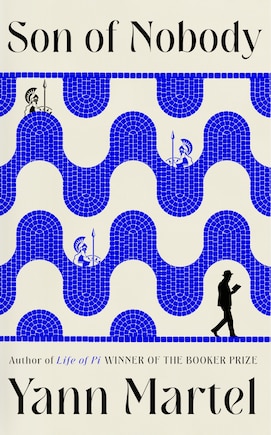

From the author of the international bestseller Life of Pi, a brilliant retelling of the Trojan War from two commoners: an ancient soldier and modern scholar.